Can Reason Save the Soul? John Stuart Mill and the Search for Meaning
Aug 18, 2026
The Ultimate Dilemma: Who Decides What Is Good?
Imagine standing at a bustling crossroads in a thriving city. On one side, city planners propose a massive public park that will bring health, recreation, and joy to 10,000 families. It represents the ultimate ideal of social progress: 'the greatest good for the greatest number.'
But there is a heartbreaking catch. To build it, the city must forcibly seize the home and legacy of one innocent family that has lived on that property for generations.
Mathematical reason tells us the equation is clear—10,000 smiles outweigh one family's tears. It feels logical. It feels efficient. It feels like necessary progress. But what if that one family is yours?
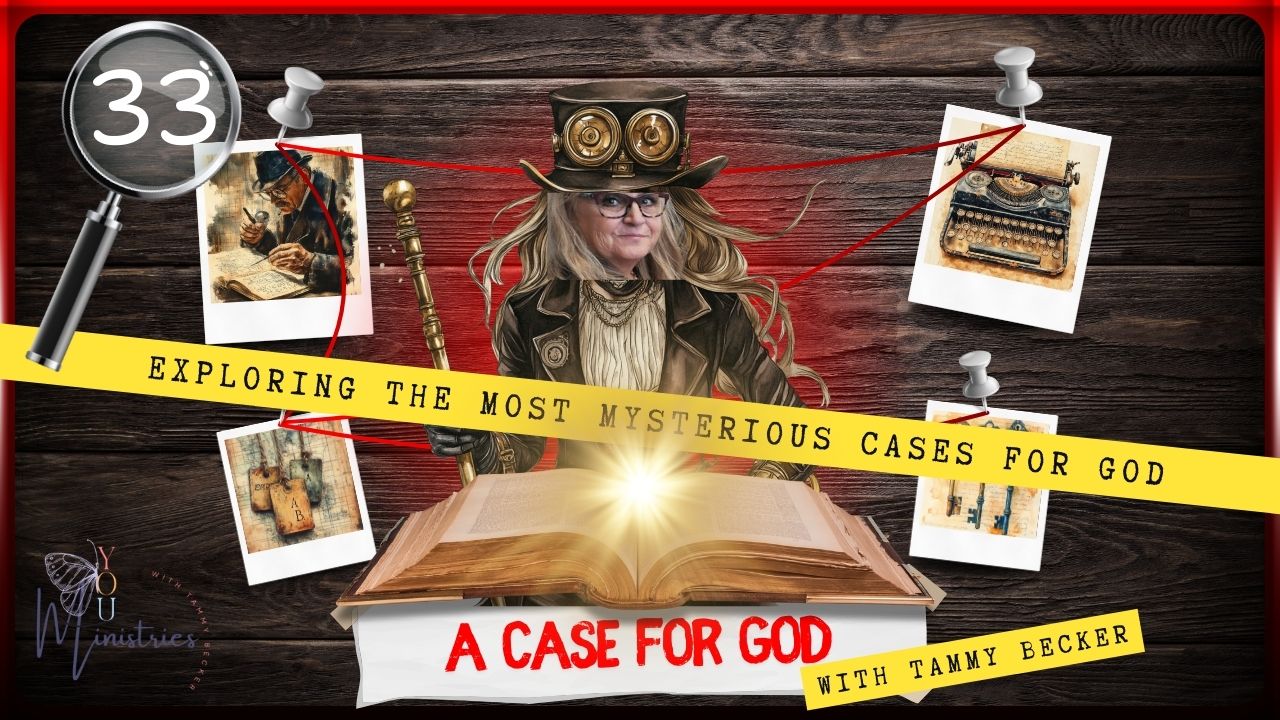
What happens to 'goodness' when it transforms into a cold mathematical calculation instead of a divine commandment? In Episode 33 of A Case for God ('What Is the Role of Reason in Ethical Philosophy?'), we step into the mind and life of John Stuart Mill—a brilliant philosopher who sought to prove that human logic alone could guide moral decision-making.
|
📺 Watch Full Lesson on YouTube Don't miss the full video investigation of Episode 33: A Case for God with host Tammy Jo Becker. Click here to watch the complete YouTube video, subscribe to the channel, and share your thoughts in the comments section below! |
Can Reason Alone Point to Moral Truth?
Modern society frequently teaches that an action is good if it works, if it helps the majority, or if it minimizes suffering. Most people operate on a 'common sense' secular ethics model: 'As long as I'm not hurting anyone and I'm helping people be happy, I'm doing the right thing.'
This thinking forms the bedrock of modern secular law and social policy. Yet it leaves behind a haunting question that secular rationalism cannot answer:
If we eliminate the Creator from the equation, does 'good' simply become whatever the majority votes it to be today?
Without an eternal anchor, human reason shifts with cultural tides. What protects the minority when the majority decides their happiness requires someone else's sacrifice?
Case Study: The Prodigy, the Crisis, and the Limits of Logic
To understand Utilitarianism and secular ethics, we must investigate the 'intellectual greenhouse' of its key pioneer, John Stuart Mill (1806–1873).
The Prodigy & The Architect
John Stuart Mill was raised by his father, James Mill, to be a human reasoning machine. Intending to produce a brilliant champion for secular philosophy, his father subjected young John to an intense educational regimen. By age three, John was learning Greek; by eight, he had read the works of Herodotus. He was a masterwork of educational engineering—but a child who was never permitted to be a child.
The Mental Crisis of 1826
In the autumn of 1826, at just twenty years old, the 'machine' broke down. Mill fell into a severe, paralyzing depression. He asked himself a single diagnostic question: 'If all your goals in life were realized this second, would you be happy?' His heart answered with a devastating 'No.' His cold, logical upbringing was powerless against the depth of human despair.
Recovery Through Beauty & Poetry
Interestingly, the man raised on pure logic was saved not by further debate, but by art. Stumbling upon the romantic poetry of William Wordsworth, Mill discovered what he called 'the culture of the feelings.' Poetry taught him that human fulfillment requires emotional resonance, beauty, and soul-level nourishment that data and utility can never supply.
|
💡 Key Theological Insight Mill's mental crisis demonstrated that human beings are not biological computers. We possess a God-given soul (Imago Dei) that starves when fed only data and efficiency. We are designed for relationship, beauty, and ultimate divine purpose. |
Scriptural Anchors: Objective Truth vs. Human Calculation
While secular logic attempts to compute morality through outcomes, God's Word reveals that true ethics flow from His unshifting character and revealed commandments.
Key Passages Investigated in Ep. 33:
- Exodus 12:12-13, 21-23; 13:3, 21-22: God provides clear instructions, ultimate protection, and constant guidance (pillar of cloud and fire) for His people, demonstrating that safety and moral direction come from divine covenant, not human speculation.
- Romans 2:14–15: Moral law is written on every human heart. Conscience bears witness to God's truth, proving that moral awareness is innate, though human reason alone is incomplete.
- Romans 12:9 & James 4:17: Good and evil are absolute realities, not majority opinions. Ethics involves responsibility before God, not merely computing physical outcomes.
- Matthew 22:37–40: Jesus establishes the foundational priority: Love God first with all your heart, soul, and mind, and love your neighbor as yourself. Neighborly love flows from devotion to the Creator.
- John 14:6: Jesus declares, 'I am the way, and the truth, and the life.' Truth is not a cold procedural formula—it is a person.
The Bread of Life for a Starving Soul
John Stuart Mill's life was characterized by a starvation of the soul. He mastered intellectual logic, yet found himself spiritually dying inside because his heart lacked an eternal home.
This connects directly to the Gospel of John, where Jesus identifies Himself not as an abstract philosophical theory, but as the Bread of Life:
“I am the bread of life; whoever comes to me shall not hunger, and whoever believes in me shall never thirst.” — John 6:35
Secular logic and social utility are helpful tools for human hands, but only a direct relationship with the Living God brings rest and nourishment to the human heart.
Take Your Faith Journey Deeper: Join the Faith Pod
|
🎙️ Join the Faith Pod Community! Are you looking for a supportive community to wrestle with life's big questions, deepen your study of Scripture, and build an unshakeable foundation in Christ? |

Conclusion & Weekly Reflection
This week, perform an honest inventory of your inner life. Are you nourishing your soul with Scripture, prayer, and divine worship, or are you operating like a machine—simply processing tasks and relying on human logic?
Remember: You are not a machine. You are a beloved child of the Creator, designed to find your ultimate purpose and joy in Him.
Next Episode Preview: Join us next week as we step into the Renaissance to examine how a profound personal faith inspired Michelangelo to view his artistic masterpieces as a direct assignment from God!
CHECK OUT THE FULL CAMPFIRE EXPERIENCE HERE:
Make sure to read through the entire page because somewhere along the trail....there lies a FREEBIE for he taking!
Download a FREE digital Bible Journaling Page for the Prophetic Pattern
Share your design talents with the world.


Founder YOU Ministries