Why Is Faith Necessary? Abraham and Isaac
Sep 21, 2026Why Is Faith Necessary? Abraham and Isaac | Ep. 3
A Case for God Companion Blog
Opening Hook
What if faith is not believing without reason, but trusting God when the evidence of His past faithfulness and the difficulty of the present moment seem to pull in opposite directions?
Introduction
In a culture that prizes certainty, faith can sound like a request to stop thinking. The story of Abraham and Isaac challenges that assumption. In Episode 3 of A Case for God, Tammy, founder of Y.O.U. Ministries, explores Genesis 22 and asks why faith is necessary if God is real. Abraham’s journey shows that biblical faith is relational trust in God’s character, promise, and provision—even when the outcome remains unseen.
Why Abraham and Isaac Still Matter Today
Genesis 22 is one of Scripture’s most difficult accounts. God tests Abraham by telling him to offer Isaac, the son through whom the covenant promise was to continue. Abraham obeys, yet his words reveal hope: he tells the servants that he and Isaac will return, and he tells Isaac that God will provide the offering. At the decisive moment, God stops Abraham. Isaac is not harmed, and a ram is offered in his place.
This account should never be used to justify violence or a private claim that God has commanded harm. Scripture presents it as a unique test, records God’s intervention, and centers the outcome on divine provision. Hebrews explains that Abraham trusted God’s power to raise the dead. His faith rested in the God who had made the promise.
That distinction matters today. Faith is not a transaction or a tool for controlling God. It is a posture of surrender that trusts His character while continuing to obey Scripture and walk with humility.
Key Scriptures for This Investigation
These passages trace the central movement of the lesson: Isaac asks the painful question, Abraham trusts God to provide, the substitute appears, and the New Testament connects Abraham’s hope with resurrection faith and God’s gift of His own Son.
Genesis 22:7–8 (ESV)
And Isaac said to his father Abraham, “My father!” And he said, “Here I am, my son.” He said, “Behold, the fire and the wood, but where is the lamb for a burnt offering?” Abraham said, “God will provide for himself the lamb for a burnt offering, my son.” So they went both of them together.
Connection: Abraham does not explain how the promise and command fit together. He trusts that provision belongs to God. Faith is dependence on the Provider, not mastery of the outcome.
Genesis 22:13–14 (ESV)
And Abraham lifted up his eyes and looked, and behold, behind him was a ram, caught in a thicket by his horns. And Abraham went and took the ram and offered it up as a burnt offering instead of his son. So Abraham called the name of that place, “The Lord will provide”; as it is said to this day, “On the mount of the Lord it shall be provided.”
Connection: The ram dies instead of Isaac. The story’s resolution emphasizes substitution and provision: God stops the sacrifice of the son and supplies what is needed.
Hebrews 11:17–19 (ESV)
By faith Abraham, when he was tested, offered up Isaac, and he who had received the promises was in the act of offering up his only son, of whom it was said, “Through Isaac shall your offspring be named.” He considered that God was able even to raise him from the dead, from which, figuratively speaking, he did receive him back.
Connection: Hebrews explains Abraham’s reasoning. He held the command and promise together by trusting God’s power over death.
Romans 8:32 (ESV)
He who did not spare his own Son but gave him up for us all, how will he not also with him graciously give us all things?
Connection: Genesis 22 ultimately directs Christian readers toward a greater gift. Isaac is spared and a substitute is supplied; at the cross, God gives His Son for our redemption. Jesus is the deepest reason believers can trust the Father’s love.
Key Takeaways from the Investigation
- Faith does not require us to understand every outcome; it calls us to remember God’s character while we take the next faithful step.
- Surrender is not a way to bargain for blessings. It releases our demand for control and places what we love into God’s wise care.
- When a passage is difficult, we should read it within the whole counsel of Scripture, with humility, ethical care, and our eyes fixed on Christ.
Watch the Full YouTube Lesson
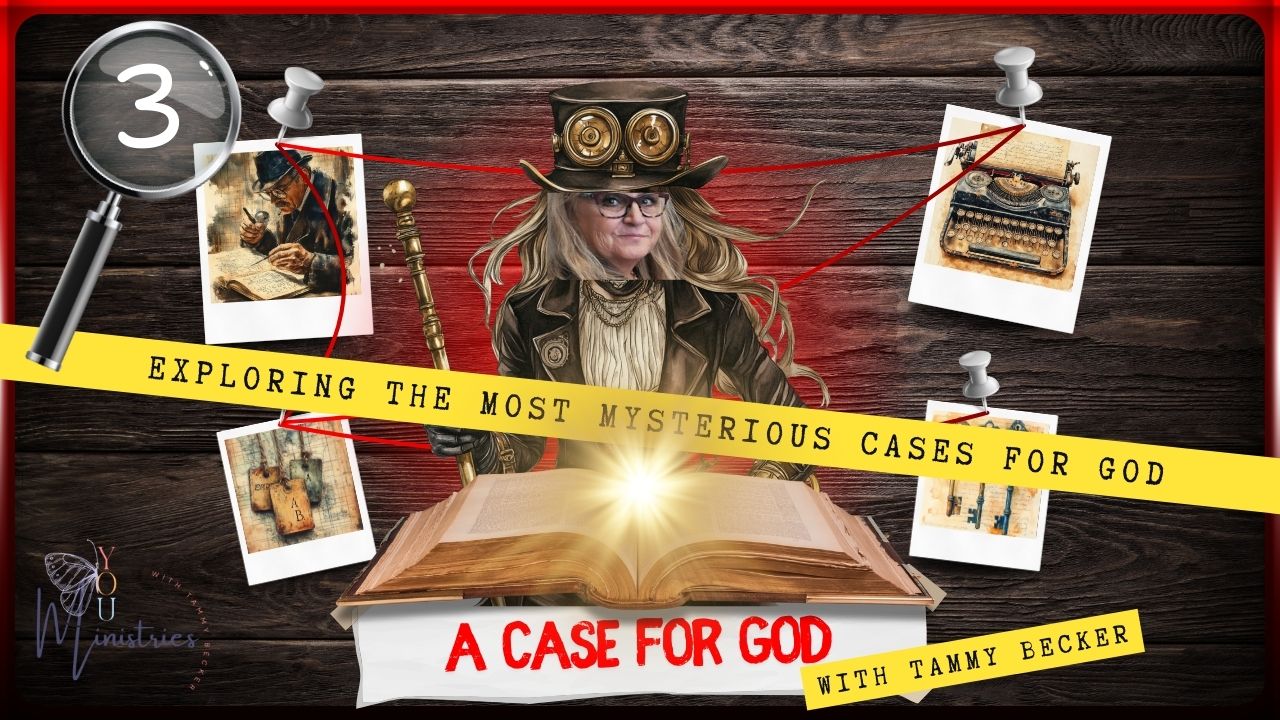
Want the complete biblical investigation? Tammy walks through Abraham and Isaac, the tension between promise and testing, faith as relational trust, and the connection between the ram in the thicket and the saving work of Jesus.
👉Watch Episode 3 on YouTube Here👈
In This Episode, You’ll Discover
- 📖 Why Genesis 22 presents Abraham’s experience as a test and places God’s provision at the center of the account.
- 🧠 How biblical faith differs from blind belief, intellectual agreement, or an attempt to control the outcome.
- 🔍 How Hebrews 11:17–19 explains Abraham’s confidence in God’s promise and power over death.
- 🙏 Why difficult questions deserve honest reflection rather than shallow or hurried answers.
- 💡 How to practice trust in ordinary areas of uncertainty without abandoning wisdom or discernment.
Join the Conversation
Have you ever faced a season when trusting God meant releasing your preferred outcome? What helped you remember His character? Share your thoughts in the comments on the YouTube lesson, and don’t forget to Like, Subscribe, and turn on notifications so you never miss another episode of A Case for God.
Want to Go Deeper?
If you love to create, create, create—the Faith Pod is for you!

Every week you’ll receive Bible journal pages, printable resources, in-depth lessons, devotionals, and special monthly bonuses designed to help you dig deeper into God’s Word while following along with each episode of A Case for God.
Conclusion and Weekly Reflection
Abraham could not see the solution, yet he trusted the God who had called him and promised a future through Isaac. The ram showed that provision came from God, not from Abraham’s ability to solve the crisis. For Christians, that line of provision reaches its fullness in Jesus, the Son given for us and raised from the dead.
This week, take an honest inventory of the places where uncertainty has become a demand for control. Ask yourself: Am I trusting God’s character, or only trusting Him when I can predict the result? Bring one concern to Him in prayer, name what you cannot control, and ask for wisdom to take the next faithful step.
Remember: faith is not pretending that hard things are simple. God meets us in our questions and shows His love in Christ. You are invited to draw near, receive grace, and trust the One who has given Himself for you.
Next Episode Preview
Join us next week as we examine religious experiences and explore a powerful question:
How can we discern whether a spiritual experience truly points to God rather than emotion, imagination, or something we have misunderstood?
GET THE FREE DEVOTIONALS:
Sign up now and get 52 weeks of Christian Devotionals for Entrepreneurs sent directly to your inbox.
Download a FREE digital Micro Bible Journaling Page
Share your design talents with the world.