What Plato Can Teach Us About Faith, Reason, and the Search for Truth
Nov 10, 2026What If Your Mind Was Designed to Lead You Toward God?
What if your ability to think logically isn't just a survival skill, but a homing beacon designed to lead you out of the shadows and into the presence of God?
That question takes us into one of the most famous thought experiments in history: Plato's Allegory of the Cave.
Picture yourself sitting in a dark cave. You have been there for as long as you can remember. Your head is fixed in one direction, and all you can see are shadows moving across a wall. Because shadows are all you have ever known, you assume they are reality.
Then someone turns you around.
At first, the light hurts. Your eyes resist it. The truth is uncomfortable.
But slowly, you begin to see.
You realize the shadows were never the whole story.
Plato used this powerful image to explore truth, education, reality, and the human pursuit of wisdom. More than two thousand years later, his questions still matter—and they give Christians an interesting doorway into thinking about the relationship between faith and reason.
In this week's A Case for God lesson, we are opening the case file on Plato and asking an important question: Can rational thought actually lead us toward God?
The Christian answer is not that reason replaces faith. It is that God gave us minds for a reason. We are invited to think, question, examine, discern, and seek truth.
Plato and the Search for What Is True
Plato lived in ancient Athens around 427–347 BC. He was a student of Socrates and the teacher of Aristotle, and he founded the Academy, one of the most influential centers of learning in the ancient world.
He lived in a world filled with political conflict, competing ideas, and questions about justice and virtue. Like many great thinkers, Plato was searching for something that did not change.
What is really true?
What makes something good?
What is justice?
What is the nature of the human soul?
Is the world we see all there is?
Those questions may sound philosophical, but they are also deeply spiritual.
Because most of us are searching for the same things.
We want to know what is true. We want to know what matters. We want to know whether our lives have meaning.
And sometimes, the questions that lead us toward God begin with simply being willing to ask.
The Allegory of the Cave: Are We Living Among Shadows?
Plato's Allegory of the Cave appears in his work The Republic. In the story, prisoners have been chained inside a cave since childhood. They face a wall and cannot turn their heads. Behind them is a fire, and people carry objects in front of the fire, creating shadows on the wall.
The prisoners believe those shadows are reality.
Then one prisoner is released.
He turns around.
He sees the fire.
Eventually, he leaves the cave and sees the world outside. Finally, he looks toward the sun.
The journey is not easy.
His eyes hurt. The light is overwhelming. The path is steep.
But once he sees the greater reality, he cannot pretend that the shadows were all there was.
This is one of the reasons Plato's cave remains such a powerful illustration of the human search for truth.
We can become comfortable with shadows.
We can mistake popularity for truth.
We can mistake success for significance.
We can mistake appearance for reality.
We can mistake what everyone says for what is actually true.
And sometimes God invites us to turn around.
God Invites Us to Use Our Minds
The Bible does not present faith as a command to stop thinking.
In Isaiah 1:18, God says:
“Come now, let us reason together, says the Lord...” (ESV)
That is a remarkable invitation.
God is not threatened by our questions.
He is not intimidated by honest investigation.
He does not ask us to check our minds at the door.
Instead, Scripture repeatedly calls us to wisdom, discernment, understanding, and renewed thinking.
Proverbs 3:19 says:
“The Lord by wisdom founded the earth; by understanding he established the heavens.” (ESV)
If God created the world with wisdom and understanding, then it makes sense that we would use wisdom and understanding to explore the world He made.
Reason is a gift.
Curiosity can be a gift.
The desire to understand can be a gift.
The ability to recognize patterns, evaluate evidence, ask questions, and distinguish truth from error can all be part of how God has made us.
The danger is not thinking too much.
The danger is thinking without humility.
Our minds are powerful, but they are not God.
That means Christian faith calls us to think deeply while remaining humble enough to say, “Lord, teach me.”
From the Shadows to the Substance
Plato's cave becomes especially interesting when we place it beside Colossians 2:17:
“These are a shadow of the things to come, but the substance belongs to Christ.” (ESV)
The Bible uses the language of shadow and substance in a different theological context than Plato, but the image gives us a helpful point of reflection.
A shadow points beyond itself.
It is real in one sense, but it is not the fullness of the thing casting it.
That is a helpful picture for our spiritual lives.
So much of what consumes our attention is temporary.
A number on a screen.
Someone else's approval.
A career achievement.
A beautiful home.
A financial goal.
A social media image.
A fear about tomorrow.
None of these things is necessarily bad. But none of them can carry the weight of ultimate meaning.
They are shadows compared with the substance found in Christ.
Jesus does not simply give us more information about reality.
He is the Truth.
He is the Light.
He is the One who meets us where we are and leads us into what is real.
A Renewed Mind Is Part of Spiritual Growth
Romans 12:2 says:
“Do not be conformed to this world, but be transformed by the renewal of your mind...” (ESV)
I love that Scripture connects transformation with the renewal of our minds.
Spiritual growth is not only about what we feel.
It includes how we think.
What we believe shapes how we live. What we repeatedly tell ourselves shapes what we fear. The stories we accept about ourselves and the world around us can either draw us toward truth or keep us trapped in shadows.
This is why renewing our minds matters.
We learn to ask:
Is this actually true?
Does this agree with Scripture?
Am I reacting to facts or assumptions?
Am I allowing fear to interpret this situation for me?
Am I believing a cultural message simply because I have heard it repeatedly?
What does God say?
Those questions can be uncomfortable.
But discomfort is not always a warning sign.
Sometimes discomfort is what happens when our eyes are adjusting to the light.
Faith Is Not Blind—But It Is Humble
There is a common idea that faith and reason are opposites.
You either believe or you think.
You either have faith or you ask questions.
But Christianity does not require us to choose between loving God and using our minds.
In fact, Jesus commanded His followers to love God with all their heart, soul, mind, and strength.
Our minds belong to God too.
At the same time, reason has limits.
This is one place where we should be careful with Plato. His philosophy contains ideas that do not line up perfectly with biblical Christianity. His understanding of the soul, reality, and the physical world is not the same as the biblical story.
Plato can help us ask important questions.
He cannot give us the Gospel.
Reason can point toward the need for truth.
It cannot manufacture grace.
Philosophy can help us recognize that we need something beyond ourselves.
Only Jesus can reconcile us to God.
That distinction matters.
We don't need to turn Plato into a Christian in order to learn something valuable from his questions.
Jesus Is More Than the Light We Seek
There is one connection to Jesus that makes this conversation especially beautiful.
John 8:12 records Jesus saying:
“I am the light of the world. Whoever follows me will not walk in darkness, but will have the light of life.” (ESV)
Plato's prisoner climbs out of the cave and discovers the light.
The Gospel gives us an even more astonishing picture.
God's Light comes looking for us.
Jesus does not simply tell us where the light is.
He is the Light.
John's Gospel also describes Jesus as the Word—the Logos—through whom all things were made.
Plato used reason and philosophy to search for ultimate reality.
The Gospel announces that ultimate reality is not merely an abstract principle.
It is a Person.
Jesus.
That changes everything.
Truth is not simply something we collect.
Truth is Someone we come to know.
What Are the Shadows in Your Life?
The cave is not only a philosophical illustration.
It can become a mirror.
What shadows have you been chasing?
Maybe it is comparison.
You see someone's carefully edited life online and decide you are falling behind.
Maybe it is approval.
You spend your energy trying to become the version of yourself that everyone else will applaud.
Maybe it is success.
You keep telling yourself that the next accomplishment will finally make you feel enough.
Maybe it is fear.
You allow an imagined future to control the choices you make today.
Maybe it is simply noise.
You have so many opinions coming at you that you have stopped taking time to ask what is actually true.
The invitation is not to become suspicious of everything.
It is to turn your head.
Pause.
Think.
Pray.
Open Scripture.
Ask God to renew your mind.
Then look for the substance instead of settling for the shadow.
The Courage to Ask Hard Questions
One of the healthiest things we can learn from Plato is that asking a question does not automatically mean we are losing faith.
Sometimes a question is the beginning of deeper faith.
“God, why?”
“Is this really true?”
“What does Scripture actually say?”
“Why do I believe this?”
“What am I assuming?”
“Where have I allowed culture to shape my thinking more than God's Word?”
These are not necessarily rebellious questions.
They can be invitations to grow.
The goal is not to question everything forever.
The goal is to seek truth honestly enough that we are willing to follow where truth leads.
And when truth leads us to Jesus, we do not have to be afraid.
Truth can withstand investigation.
Jesus can withstand our questions.
God is not fragile.
A Simple Practice for This Week: Turn Your Head
Try this simple practice over the next seven days.
Whenever something creates a strong emotional reaction in you, pause before responding.
Take a breath.
Ask yourself: **“Is this a shadow, or is this the substance?”**
If you are comparing yourself, what is actually true about your identity?
If you are anxious, what is actually true about God's character?
If you are angry, what is actually true about the situation?
If you are discouraged, what has God already said?
Then bring your thoughts under the light of Scripture.
You may discover that the situation has not changed—but your understanding of it has.
That is part of what it means to have a renewed mind.
The goal is not to become emotionless.
It is to become discerning.
What Plato Teaches Us About the Strength of Rational Thought
Plato's legacy reminds us that the human mind is hungry for more than appearances.
We want truth.
We want goodness.
We want justice.
We want beauty.
We want meaning.
The Christian worldview gives us a reason for that hunger: we were made by a God of truth, goodness, justice, beauty, and meaning.
Our longing for what is ultimate points beyond ourselves.
But Christianity takes us one step further than philosophy.
We do not simply climb toward God through intellectual effort.
God comes toward us.
Grace meets us.
Jesus enters the darkness.
The Light shines.
And we are invited to follow Him.
Keep Exploring A Case for God
If this exploration of Plato and the Allegory of the Cave has made you curious about the relationship between faith, reason, and truth, I would love for you to watch the full A Case for God: Plato lesson on YouTube.
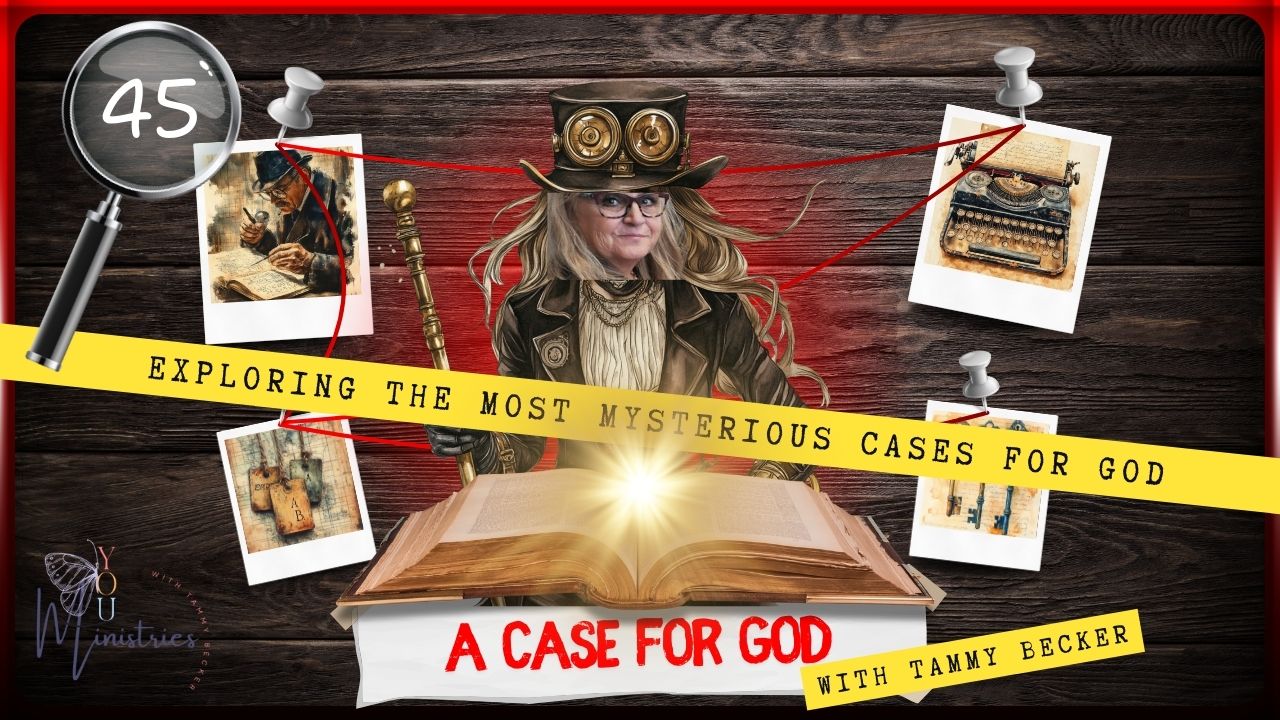
The video takes a deeper look at Plato's life, his philosophy, the Allegory of the Cave, the strengths and limitations of rational thought, and what all of this can teach us about seeking God with both faith and understanding.
So grab your Bible, make a cup of coffee, and give yourself permission to think deeply.
And when you finish the lesson, don't just move on to the next thing.
Sit with it.
Ask God what He wants you to see.
What shadow have you been treating like the whole truth?
That may be where your own ascent begins.
Come Grow With Us in the Faith Pod
If you love conversations that help you grow in your faith, ask honest questions, and go deeper into Scripture, I want to personally invite you into the **Faith Pod**.
You don't have to arrive with all the answers.
You don't have to be a theology expert.
You don't have to have your faith perfectly figured out.
The Faith Pod is a place to keep learning, growing, asking questions, and encouraging one another as we follow Jesus.
Sometimes the most meaningful spiritual growth happens when we stop trying to figure everything out alone and begin walking alongside people who are seeking God too.

Final Reflection
Maybe the invitation this week is simply to turn your head.
Turn away from the shadows.
Turn away from the constant noise.
Turn away from the pressure to accept every idea without examining it.
Turn toward truth.
Turn toward Scripture.
Turn toward Jesus.
Plato reminds us that the climb toward truth can be uncomfortable. The Bible reminds us that God renews our minds as we surrender them to Him.
And Jesus reminds us that we do not have to find the Light on our own.
He is the Light.
So ask the hard questions.
Think deeply.
Stay humble.
Test what you hear against Scripture.
And keep moving toward Jesus.
The mind is not the enemy of faith.
When surrendered to God, it can become one of the beautiful ways we learn to recognize His truth.
A Prayer
Father, thank You for the gift of our minds.
Thank You that You created us with the ability to think, question, learn, reason, and seek truth.
Help us not to be satisfied with shadows when You have invited us into the light.
Renew our minds.
Give us discernment when the world is loud.
Give us humility when we are wrong.
Give us courage when truth is uncomfortable.
And help us remember that our search for truth ultimately leads us to a Person—not merely an idea.
Jesus, You are the Light of the world.
Lead us out of confusion and into Your truth.
Teach us to love You with our hearts, our souls, and our minds.
In Jesus' name, amen.
Looking Ahead
Next week, A Case for God moves from the high peaks of Greek philosophy to the dusty roads of India as we open the case file on Mahatma Gandhi.
We will investigate the power of lived-out conviction and ask:
Can a single life, fueled by spiritual discipline and “soul-force,” actually help dismantle an empire?
Join us as we explore the case for non-violence and consider how a life committed to justice can become a visible expression of faith in action.

CHECK OUT THE FULL CAMPFIRE EXPERIENCE HERE:
Make sure to read through the entire page because somewhere along the trail....there lies a FREEBIE for he taking!
Download a FREE digital Bible Journaling Page for the Prophetic Pattern
Share your design talents with the world.


Founder YOU Ministries