What Is Advent? Discover the Meaning Behind the Season
Oct 31, 2026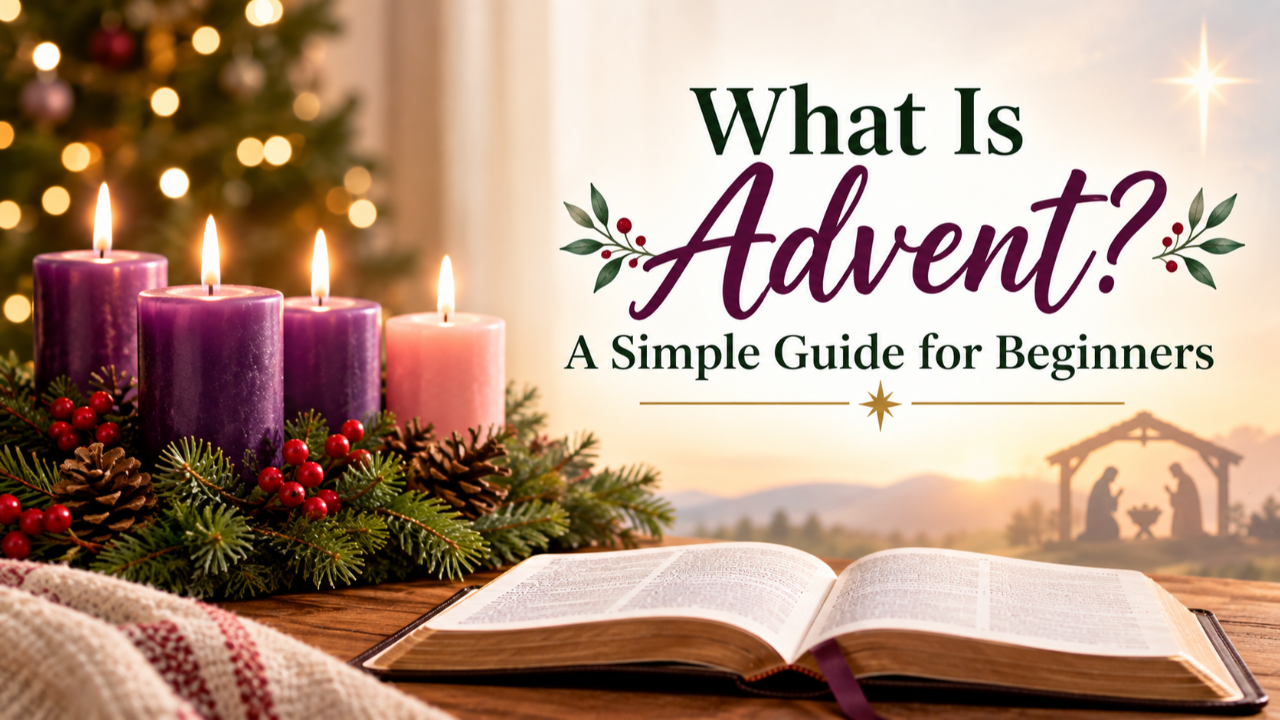
Have you ever heard someone talk about Advent and wondered what they were talking about?
Maybe you’ve seen Advent calendars in stores.
Maybe your church lights candles each Sunday leading up to Christmas.
Maybe someone mentioned an Advent devotional or Bible study, and you thought, I know this has something to do with Christmas, but I’m not really sure what.
If that’s you, you’re not alone.
And the good news is that Advent is actually very simple.
At its heart, Advent is a season of waiting, remembering, and preparing our hearts for Jesus.
It gives us an opportunity to slow down during one of the busiest times of the year and remember what Christmas is really about.
Jesus came.
God kept His promise.
Hope entered the world.
And the story that began in Bethlehem points us to something much bigger than a manger.
So if Advent is new to you, let’s walk through it together.
No complicated explanation.
No pressure to do it perfectly.
Just a simple look at what Advent is, why it matters, and how you can make room for Jesus this Christmas season.

What Does the Word Advent Mean?
The word Advent comes from a Latin word that means “coming” or “arrival.”
And that gives us a beautiful starting point.
Advent is about remembering the coming of Jesus Christ.
For centuries, Christians have used this season before Christmas as a time of spiritual preparation.
Instead of rushing straight into Christmas morning, Advent invites us to pause.
To wait.
To remember.
To reflect.
And to prepare our hearts to celebrate the birth of Jesus.
But there is another beautiful part of Advent.
It doesn't only look backward.
It also points forward.
We remember that Jesus came into the world, but we also remember that He promised to come again.
So Advent holds both remembrance and expectation.
We look back at Bethlehem.
And we look ahead with hope.
When Does Advent Begin?
Advent begins on the Sunday closest to November 30 and continues through Christmas Eve.
That means Advent lasts for approximately four weeks.
Each week gives us another opportunity to focus our hearts on the coming of Christ.
Many churches mark the four Sundays of Advent with candles, Scripture readings, prayers, and worship.
Some families follow an Advent devotional at home.
Others use an Advent calendar with Scripture or activities.
Some simply read through the Christmas story together.
There isn't one perfect way to observe Advent.
And that's important to remember.
You don't have to recreate someone else's traditions to experience the beauty of the season.
You can start simply.
Open your Bible.
Read Scripture.
Pray.
Remember Jesus.
That's enough.

Why Do Christians Celebrate Advent?
Christmas can easily become focused on everything except Jesus.
There are gifts to buy.
Meals to plan.
Decorations to put up.
Cards to send.
Events to attend.
Travel arrangements to make.
Family schedules to coordinate.
And before we know it, December is almost over.
Advent gives us a reason to stop and remember.
Who are we celebrating?
Jesus.
Not just a baby.
Not simply a beautiful story.
Jesus—the promised Savior.
Matthew 1:21 says:
“You shall call his name Jesus, for he will save his people from their sins.”
That's why Christmas matters.
God didn't simply send a message.
He sent His Son.
He came near.
He stepped into our world.
And Advent gives us space to sit with that truth before the celebration begins.

Advent Is a Season of Waiting
One of the most important ideas behind Advent is waiting.
And waiting is not always easy.
We tend to want things now.
Answers now.
Clarity now.
Resolution now.
But Scripture is full of people who waited for God.
The Israelites waited for the promised Messiah.
Generations passed.
Prophets spoke of His coming.
People hoped.
People prayed.
People waited.
And then, at exactly the right time, Jesus came.
Galatians 4:4 says:
“But when the fullness of time had come, God sent forth his Son.”
I love that phrase.
The fullness of time.
God was not late.
He was not surprised by the waiting.
He was not scrambling to figure out what to do next.
He had a plan.
And perhaps that's one of the things Advent can teach us today.
God is faithful in the waiting.
Maybe you're waiting for something right now.
An answer.
A change.
A relationship to heal.
A door to open.
A prayer to be answered.
Advent reminds us that waiting doesn't mean God has forgotten us.
Sometimes waiting is where God is preparing our hearts.
The Four Themes of Advent
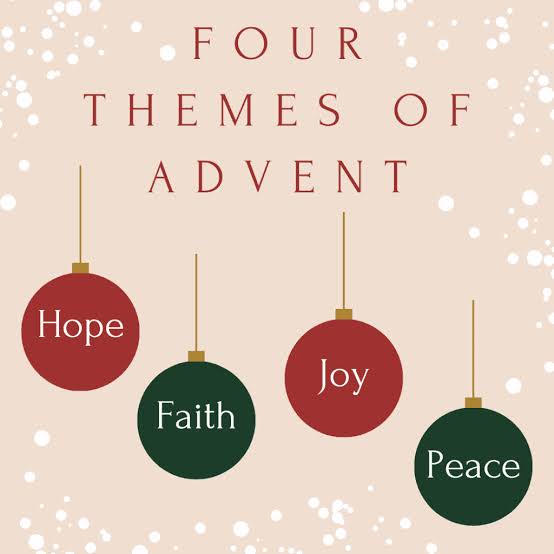
You may have heard people talk about the four themes of Advent.
While traditions can vary from church to church, the four commonly recognized themes are:
Hope.
Peace.
Joy.
Love.
These themes help guide our hearts through the season.
Let's look at each one.
Week One: Hope
The first week of Advent often focuses on hope.
Biblical hope isn't wishful thinking.
It's confidence in God.
It's believing that God is faithful even when we cannot yet see the outcome.
Isaiah 9:2 speaks of people walking in darkness who would see a great light.
Imagine what that promise would have meant to people who were waiting for deliverance.
And then think about your own life.
Where do you need hope?
Maybe you're walking through a difficult season.
Maybe you're uncertain about the future.
Maybe Christmas brings complicated emotions.
Advent reminds us that our hope is not found in perfect circumstances.
Our hope is found in Christ.
Week Two: Peace
The second week often points us toward peace.
The angels announced the birth of Jesus in Luke 2 with words of glory to God and peace.
But biblical peace doesn't mean everything around us will always be calm.
You can have peace while your circumstances are still uncertain.
You can have peace while you're waiting.
You can have peace when you don't have all the answers.
Why?
Because peace is ultimately found in a Person.
Jesus.
When the world around you feels noisy, Advent gives you permission to slow down and remember where your peace comes from.
Week Three: Joy
The third week often focuses on joy.
And this is where the Christmas story becomes especially beautiful.
When the angel announced Jesus' birth to the shepherds, he called it:
“good news of great joy.”
Joy wasn't coming because life was suddenly going to be easy.
Joy was coming because the Savior had come.
That distinction matters.
Our circumstances change.
Our feelings change.
But Jesus remains.
Christian joy isn't pretending everything is wonderful.
It's knowing that even in hard seasons, God is still good.
Week Four: Love
The fourth week often focuses on love.
And what greater picture of love do we have than God sending His Son?
John 3:16 reminds us that God loved the world so much that He gave His only Son.
Christmas is a story of giving.
God gave.
Jesus came.
Love moved toward us.
And Advent gives us a chance to slow down enough to actually think about that.
Not just sing about it.
Not just decorate around it.
But sit with it.
God loves us.

What Is an Advent Wreath?
If you've ever seen a wreath with four candles during the Christmas season, you've probably seen an Advent wreath.
Traditionally, the wreath has four candles, with one candle lit each Sunday of Advent.
Some traditions also include a fifth candle in the center, called the Christ candle, which is lit on Christmas Eve or Christmas Day.
The candles represent the growing light as Christmas approaches.
But the symbolism can also remind us of something much deeper.
Jesus came as the Light of the World.
John 8:12 says:
“I am the light of the world. Whoever follows me will not walk in darkness, but will have the light of life.”
Think about that for a moment.
The world can feel dark.
Life can feel uncertain.
But Jesus came as light.
Advent invites us to remember that light.
Do I Have to Use an Advent Wreath?
No.
And I want to emphasize this because it's easy to turn beautiful traditions into requirements.
You don't have to have an Advent wreath.
You don't have to light candles.
You don't have to follow a particular denomination's tradition.
You don't have to own an Advent calendar.
You don't have to decorate your home a certain way.
These things can be meaningful tools, but they aren't what makes Advent special.
The heart of Advent is Jesus.
If all you do is open your Bible and spend five quiet minutes remembering His coming, you are still making room for what matters.
Don't let the details keep you from the heart of the season.
How Can a Beginner Celebrate Advent?
If Advent is completely new to you, start small.
You don't need an elaborate plan.
Here are a few simple ways to begin.
1. Read the Christmas Story
Start with Luke 1–2 and Matthew 1–2.
Read slowly.
Notice the people.
Notice their responses to God.
Notice the promises.
Notice the waiting.
Notice the worship.
Ask yourself:
What does this story show me about God?
2. Choose One Advent Theme Each Week
Spend one week reflecting on hope.
The next on peace.
Then joy.
Then love.
You can find Scriptures connected to each theme and spend a few minutes journaling about what God is showing you.
3. Pray Through the Christmas Story
After reading a passage, turn it into prayer.
Thank God for sending Jesus.
Ask Him to prepare your heart.
Tell Him where you're struggling to have hope.
Give Him the things you're carrying.
There doesn't need to be anything complicated about it.
Just talk to God.
4. Slow Down
This might be the most important one.
Don't turn Advent into another thing to accomplish.
If you are already overwhelmed by December, adding twenty more activities won't necessarily help.
Instead, create small moments of stillness.
Sit with your Bible.
Turn off your phone.
Light a candle if that helps you focus.
Take a breath.
Remember.
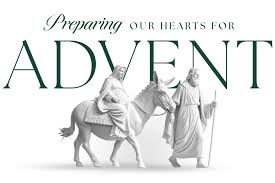
Advent Is About Preparing Your Heart
I think this is one of the most beautiful things about Advent.
It gives us permission to prepare internally.
We're used to preparing for Christmas externally.
We decorate.
We shop.
We bake.
We clean.
We plan.
But how often do we prepare our hearts?
Maybe this year we can ask different questions.
What is God showing me?
What do I need to surrender?
Where do I need hope?
Where have I been rushing?
What would it look like to make more room for Jesus?
These questions can take us somewhere deeper than simply checking things off a Christmas list.
They invite us to let God work in our hearts.
You Don't Have to Get Advent Perfect
If you're new to Advent, please don't feel like you need to do everything.
You don't.
You don't have to complete every devotional.
You don't have to read every Scripture.
You don't have to keep up with every tradition.
You don't have to create a picture-perfect Advent experience.
Some days will be peaceful.
Some will be busy.
Some days you'll sit quietly with God.
Other days you'll realize at bedtime that you forgot.
That's okay.
Grace is still there.
You can begin again tomorrow.
Advent isn't a test.
It's an invitation.
An invitation to remember.
An invitation to wait.
An invitation to hope.
An invitation to prepare your heart for Jesus.
What Advent Can Teach Us About God's Faithfulness
When we look at the Christmas story, we see a God who keeps His promises.
The Messiah didn't appear by accident.
Jesus' coming was part of God's plan.
For generations, God's people waited.
And then, in God's perfect timing, the promise became reality.
That should encourage us when we're waiting too.
Maybe you're carrying a promise you're still waiting to see fulfilled.
Maybe you've been praying for something for a long time.
Maybe you wonder if God is doing anything at all.
Advent reminds us:
God is faithful even when the waiting feels long.
His timing is not our timing.
His ways are not our ways.
But He is trustworthy.
And the God who kept His promise to send Jesus is the same God we can trust with our lives today.
A Simple Advent Bible Study Plan
If you want to begin with something very simple, try this:
Week One — Hope
Read Isaiah 9:2, Isaiah 9:6, and Romans 15:13.
Ask: Where do I need to trust God for hope?
Week Two — Peace
Read Luke 2:8–14 and John 14:27.
Ask: Where do I need to receive God's peace instead of trying to create my own?
Week Three — Joy
Read Luke 1:39–45 and Luke 2:8–20.
Ask: What has God given me to rejoice in?
Week Four — Love
Read John 3:16, 1 John 4:9–10, and Romans 5:8.
Ask: What does God's love for me change about the way I live?
And throughout all four weeks, keep coming back to one simple question:
What is God showing me about Jesus?
That question can carry you through the entire Advent season.
Advent Journal Prompts
If you'd like to go a little deeper, take some time with these questions:
- What does Advent mean to me?
- What am I waiting for in this season of my life?
- Where do I need hope?
- What is making it difficult for me to experience peace?
- What brings me genuine joy?
- How has God shown His love to me?
- What does the birth of Jesus reveal about God's character?
- What am I carrying into Christmas that I need to surrender?
- How can I create more room for Jesus during this season?
- What promise from Scripture do I want to remember this Advent?
Don't rush through these.
Pick one.
Write honestly.
Pray about what comes to mind.
Sometimes a simple question can open the door to a much deeper conversation with God.
A Prayer for Your First Advent
Father,
Thank You for sending Jesus.
As I enter this Advent season, help me slow down enough to remember what Christmas is really about.
Help me not to get so caught up in everything I need to do that I forget the One I am celebrating.
Teach me to wait with hope.
Give me peace when life feels overwhelming.
Fill my heart with joy that isn't dependent on my circumstances.
Help me understand more deeply the love You showed us by sending Your Son.
Prepare my heart for Christmas.
Show me what I need to surrender.
Show me where I need to slow down.
Help me make room for You in the middle of my ordinary days.
Thank You for being faithful.
Thank You for keeping Your promises.
Thank You for coming near.
Thank You for Jesus.
Amen.
So, What Is Advent?
If you remember nothing else, remember this:
Advent is a season of preparing our hearts for Jesus.
It is a time to remember that Christ came.
It is a time to wait with hope.
It is a time to reflect on God's promises.
It is a time to celebrate the Light that came into the darkness.
And it is a time to remember that Jesus is still with us.
You don't need to make Advent complicated.
You don't need to do everything.
Start with Scripture.
Start with prayer.
Start with a quiet moment.
Start by remembering.
Because in a season filled with so much noise, Advent gives us permission to listen.
To slow down.
To look toward Bethlehem.
And to remember:
God came near.
Jesus came.
Hope came.
Love came.
Light came.
And that is worth slowing down for.
🎄 Make Room for What Matters This Christmas
If you're looking for a practical way to bring a little more peace and organization to your Christmas season, the Christmas Planner 2026 is a beautiful companion for the weeks ahead.

Use it to organize the practical details while intentionally making room for what matters most—Jesus, family, gratitude, prayer, and meaningful moments together.
Because planning isn't about creating a perfect Christmas.
Sometimes it's simply about clearing some of the mental clutter so you can actually enjoy the season.
Prepare the schedule. Prepare the home. But most importantly, prepare your heart.
🔥 Looking Ahead to 2027: The Campfire Experience
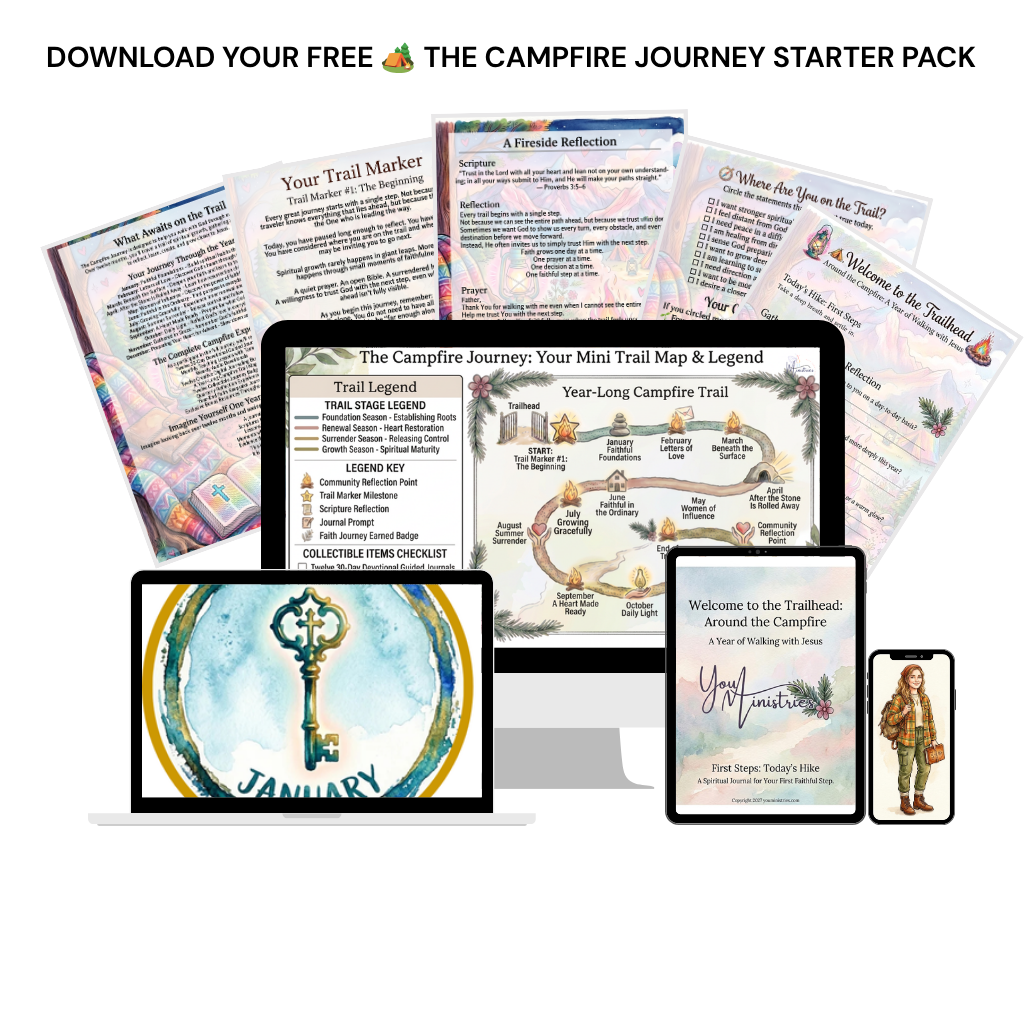
And as we begin looking beyond Christmas, I'd also love to invite you to keep The Campfire Experience 2027 in mind.
There is something special about stepping away from the noise and creating space to listen, reflect, connect, and grow in your faith.
Advent reminds us that slowing down matters.
And that invitation doesn't have to end when Christmas does.
Sometimes God does some of His most meaningful work when we stop rushing long enough to notice what He is doing.
So as you enter Advent, don't worry about doing it perfectly.
Just begin.
Open your Bible.
Light a candle.
Say a prayer.
Remember Jesus.
And let this season be less about accomplishing more and more about making room for the One who came to be God with us.

CHECK OUT THE FULL CAMPFIRE EXPERIENCE HERE:
Make sure to read through the entire page because somewhere along the trail....there lies a FREEBIE for he taking!
Download a FREE digital Bible Journaling Page for the Prophetic Pattern
Share your design talents with the world.


Founder YOU Ministries