Why Does Evil Exist? The Job Investigation
Sep 22, 2026Why Does Evil Exist? The Job Investigation | Ep. 7
A Case for God Companion Blog
Opening Hook
What if the presence of evil does not prove that God is absent—but reveals how deeply we long for goodness, justice, and a hope stronger than suffering?
Introduction
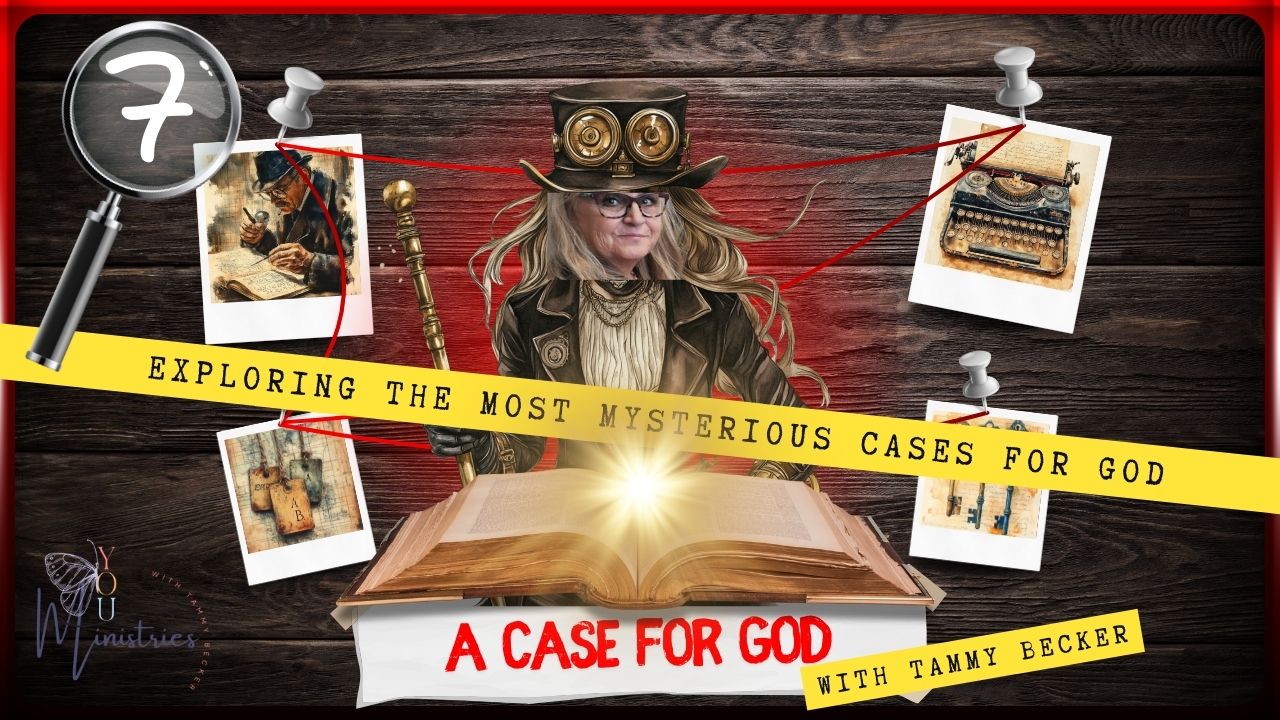
If God is both all-powerful and perfectly good, why does evil exist? The question is discussed in philosophy, but it is rarely only theoretical. It rises in hospital rooms, after injustice, and in seasons when prayer seems unanswered. In Episode 7 of A Case for God, Tammy, founder of Y.O.U. Ministries, investigates the problem of evil through the story of Job and the cross of Jesus. Scripture does not reduce suffering to a simple formula. It invites honest lament, corrects shallow explanations, and points us toward the God who remains sovereign and present even when the reason for our pain is hidden.
Why the Story of Job Still Matters Today
Job is introduced as blameless and upright, yet he experiences devastating losses. His children die, his possessions are taken, his health collapses, and those closest to him cannot explain what has happened. His friends repeatedly assume that suffering must be punishment for secret sin. The reader, however, knows that their conclusion is wrong. Job’s suffering is not presented as proof of hidden wickedness.
That distinction matters because people still reach for quick explanations when tragedy strikes. We may believe that good behavior should guarantee protection or that pain always reveals personal failure. Job refuses that simple equation. He grieves openly, asks difficult questions, and brings his anguish before God. His lament shows that faith is not pretending everything is fine. Faith can speak honestly while continuing to address God.
When God finally answers, He does not give Job a detailed explanation of the heavenly events behind his suffering. Instead, He reveals the scale of His wisdom and governance through the wonders of creation. Job is reminded that his knowledge is limited, but he is not abandoned. The book does not tell us that pain is unimportant. It teaches that human understanding is not large enough to judge the whole of God’s work from one painful chapter.
Key Scriptures for This Investigation
These passages hold together grief, mystery, sovereignty, and hope. Job responds to loss without denying its weight. God confronts the limits of human understanding. Paul assures believers that God remains at work, and Peter points to the cross as the place where lawless human action could not overturn God’s redemptive purpose.
Job 1:20–22 (ESV)
Then Job arose and tore his robe and shaved his head and fell on the ground and worshiped. And he said, “Naked I came from my mother’s womb, and naked shall I return. The Lord gave, and the Lord has taken away; blessed be the name of the Lord.” In all this Job did not sin or charge God with wrong.
Connection: Job’s response includes visible grief and continued worship. Scripture does not portray sorrow as unbelief; it shows a wounded man bringing his loss into his relationship with God.
Job 38:1–4 (ESV)
Then the Lord answered Job out of the whirlwind and said: “Who is this that darkens counsel by words without knowledge? Dress for action like a man; I will question you, and you make it known to me. Where were you when I laid the foundation of the earth? Tell me, if you have understanding.”
Connection: God’s questions do not provide a tidy reason for every loss. They widen Job’s perspective and remind him that divine wisdom reaches beyond what one human life can presently see.
Acts 2:23–24 (ESV)
This Jesus, delivered up according to the definite plan and foreknowledge of God, you crucified and killed by the hands of lawless men. God raised him up, loosing the pangs of death, because it was not possible for him to be held by it.
Connection: The cross exposes real human evil while also displaying God’s sovereign redemptive plan. God does not call the crucifixion good; He defeats its intended end through the resurrection.
Romans 8:28 (ESV)
And we know that for those who love God all things work together for good, for those who are called according to his purpose.
Connection: Paul does not say that all things are good. He says God works through all things for the good of His people and His purpose. Evil is not given the final word.
Key Takeaways from the Investigation
- Suffering is not reliable evidence that a person has sinned, lacks faith, or has been abandoned by God.
- Faith can include grief, protest, and unanswered questions while still turning toward God rather than away from Him.
- Christians face evil with hope because the cross and resurrection show that God can redeem what human beings intended for destruction.
Watch the Full YouTube Lesson
Want the complete biblical investigation? Tammy walks through Job’s suffering, the mistaken assumptions of his friends, the philosophical problem of evil, free will and other Christian responses, God’s answer from the whirlwind, and the hope revealed through Jesus’ cross and resurrection.
👉Watch Episode 7 on YouTube Here👈
In This Episode, You’ll Discover
- 📖 Why the book of Job challenges the belief that suffering is always punishment for personal sin.
- 🧠 How the problem of evil places God’s power, goodness, and the reality of suffering in tension.
- 🔍 What God’s response to Job reveals about human limits and divine wisdom.
- 🙏 How honest lament can remain an expression of faith rather than a rejection of God.
- 💡 Why the cross gives Christians more than a theory by revealing God present within suffering and victorious over death.
Join the Conversation
Have you ever felt pressured to explain suffering when what you most needed was someone’s faithful presence? What has helped you remain honest with God during a painful season? Share your thoughts in the comments on the YouTube lesson, and don’t forget to Like, Subscribe, and turn on notifications so you never miss another episode of A Case for God.
Want to Go Deeper?
If you love to create, create, create—the Faith Pod is for you!

Every week you’ll receive Bible journal pages, printable resources, in-depth lessons, devotionals, and special monthly bonuses designed to help you dig deeper into God’s Word while following along with each episode of A Case for God.
Conclusion and Weekly Reflection
Job’s story does not solve the problem of evil with one explanation. Instead, it corrects the belief that every sufferer deserves what happened and reveals that a faithful person may endure pain whose purpose remains hidden. Biblical truth then carries the investigation to Jesus. At the cross, God entered innocent suffering, exposed the cruelty of sin, and transformed an instrument of death into the means of redemption. The resurrection assures us that evil is real, but it is neither sovereign nor eternal.
This week, take an honest inventory of how you respond when life feels unfair. Ask yourself: Do I assume pain is proof that God has left me, or can I bring my questions to Him while I wait? Set aside time to name your grief plainly in prayer or in your journal. If the burden is heavy, invite a trusted believer, pastor, counselor, or supportive friend to walk beside you rather than carrying it alone.
Remember: God does not ask you to call evil good or pretend that suffering does not hurt. He meets you with truth, presence, and the hope of resurrection. In Christ, you are not promised freedom from every present sorrow, but you are held by the One whom death itself could not overcome.
Next Episode Preview
Join us next week as we continue examining suffering and divine justice through an even more personal question:
Why do bad things happen to good people—and is suffering always the result of sin, or could something deeper be happening when life feels painfully unfair?
GET THE FREE DEVOTIONALS:
Sign up now and get 52 weeks of Christian Devotionals for Entrepreneurs sent directly to your inbox.
Download a FREE digital Micro Bible Journaling Page
Share your design talents with the world.