Why Do Good People Suffer? Elie Wiesel Investigation
Sep 22, 2026Why Do Good People Suffer? Elie Wiesel Investigation | Ep. 8
A Case for God Companion Blog
Opening Hook
What if innocent suffering cannot be explained by a simple formula—but still calls us to seek God, defend human dignity, and refuse the indifference that allows evil to spread?
Introduction
Why do bad things happen to people who did nothing to deserve them? This question moves beyond an abstract debate when suffering has a name, a family, and a history. In Episode 8 of A Case for God, Tammy, founder of Y.O.U. Ministries, examines innocent suffering through the life and testimony of Holocaust survivor Elie Wiesel. His story does not offer an easy theological solution. It confronts us with the cruelty human beings can inflict, the anguish of divine silence, and the possibility of continuing to question, remember, and act even when faith has been deeply wounded.
Why Elie Wiesel’s Testimony Still Matters Today
Elie Wiesel was fifteen when he and his family were deported from Sighet in May 1944. At Auschwitz-Birkenau, his mother and younger sister were murdered. Wiesel and his father were selected for forced labor, imprisoned at Monowitz, and later transported to Buchenwald, where his father died. Wiesel survived and eventually wrote Night, his account of persecution, loss, dehumanization, and spiritual struggle during the Holocaust.
Wiesel’s testimony matters because it prevents suffering from becoming a comfortable thought experiment. The Holocaust was not an unavoidable accident or a vague force called fate. It was carried out through hatred, antisemitism, state power, human choices, and the cooperation or indifference of others. Any discussion of God and suffering must therefore take human moral responsibility seriously. Asking where God was does not release people from asking where their neighbors were and how societies permitted such evil to advance.
After the war, Wiesel became an author, professor, and advocate for human rights and Holocaust remembrance. He received the Nobel Peace Prize in 1986. His enduring witness shows that anguish and moral action can exist together. He wrote openly about his crisis of faith, yet he continued to wrestle with God and to call others away from indifference. His life reminds us that wounded faith may speak through lament, protest, memory, and the defense of others.
Key Scriptures for This Investigation
Scripture does not hide the cries of those who suffer. Habakkuk questions God about violence and delayed justice. Jesus weeps in the presence of death. Paul looks beyond present suffering toward promised glory, and Revelation closes with a vision in which God ends death and pain. Together, these passages make room for lament while anchoring hope in God’s final restoration.
Habakkuk 1:2–3 (ESV)
O Lord, how long shall I cry for help, and you will not hear? Or cry to you “Violence!” and you will not save? Why do you make me see iniquity, and why do you idly look at wrong? Destruction and violence are before me; strife and contention arise.
Connection: Habakkuk’s prayer gives biblical language to the anguish caused by injustice. He does not hide his questions or confuse silence with peace; he brings what he sees directly to God.
John 11:35 (ESV)
Jesus wept.
Connection: At Lazarus’s tomb, Jesus knows resurrection is coming, yet He still enters the grief around Him. Christian hope does not require emotional distance from loss.
Romans 8:18 (ESV)
For I consider that the sufferings of this present time are not worth comparing with the glory that is to be revealed to us.
Connection: Paul does not deny present suffering. He places it within a larger future in which God’s promised glory outweighs what His people now endure.
Revelation 21:4 (ESV)
He will wipe away every tear from their eyes, and death shall be no more, neither shall there be mourning, nor crying, nor pain anymore, for the former things have passed away.
Connection: Scripture’s final hope is not an explanation that makes suffering acceptable. It is God’s promise to end death, mourning, crying, and pain.
Key Takeaways from the Investigation
- Innocent suffering should move us toward truthful remembrance and compassionate action, not suspicion that every sufferer caused their own pain.
- Biblical faith permits lament and difficult questions; honest grief can remain part of a living relationship with God.
- Hope does not erase responsibility. Believers are called to resist hatred, protect human dignity, and refuse the indifference that permits injustice to grow.
Watch the Full YouTube Lesson
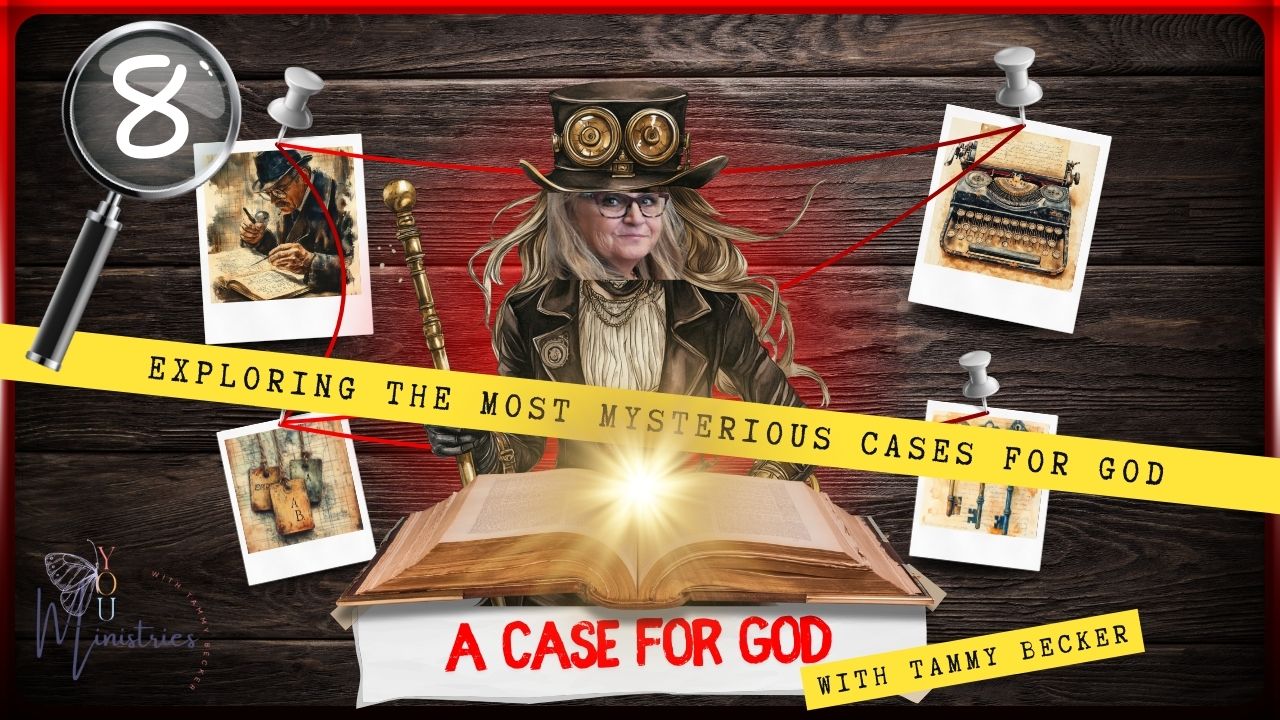
Want the complete biblical investigation? Tammy walks through Elie Wiesel’s Holocaust testimony, his crisis of faith, the question of divine silence, human freedom and moral responsibility, biblical lament, and the Christian hope found in Jesus and God’s promised restoration.
👉Watch Episode 8 on YouTube Here👈
In This Episode, You’ll Discover
- 📖 How Scripture gives sufferers permission to cry out against violence and injustice.
- 🧠 Why the Holocaust makes simplistic explanations for innocent suffering morally and spiritually inadequate.
- 🔍 How Wiesel’s testimony connects remembrance with the responsibility to confront hatred and indifference.
- 🙏 Why questions, grief, and lament do not automatically mean faith has disappeared.
- 💡 How Jesus’ tears and Scripture’s promise of restoration offer hope without minimizing present pain.
Join the Conversation
Have you ever struggled to reconcile innocent suffering with your belief in God’s goodness? What helped you remain honest, compassionate, or hopeful? Share your thoughts in the comments on the YouTube lesson, and don’t forget to Like, Subscribe, and turn on notifications so you never miss another episode of A Case for God.
Want to Go Deeper?
If you love to create, create, create—the Faith Pod is for you!

Every week you’ll receive Bible journal pages, printable resources, in-depth lessons, devotionals, and special monthly bonuses designed to help you dig deeper into God’s Word while following along with each episode of A Case for God.
Conclusion and Weekly Reflection
Elie Wiesel’s testimony brings the question of innocent suffering out of theory and into history. His experience exposes the destructive power of hatred and the devastating consequences of human indifference. Biblical truth does not ask us to defend suffering or label it good. It allows us to lament, reveals Jesus weeping beside the grieving, and directs our hope toward the day when God will end death and pain.
This week, take an honest inventory of how you respond when another person suffers. Ask yourself: Do I rush to explain, quietly withdraw, or make room to listen and help? Consider one practical way to resist indifference—learn a person’s story, support someone carrying grief, challenge dehumanizing language, or pray while also taking responsible action.
Remember: you do not need a complete explanation before you can offer compassion. God sees the wounded, receives honest cries, and calls His people to protect the dignity of those made in His image. In Christ, you are invited to grieve with hope and to become a faithful presence in a world that still needs truth, courage, and mercy.
Next Episode Preview
Join us next week as we explore redemptive suffering and ask a powerful question:
Can suffering lead to spiritual growth—and how can pain become a place of deeper faith, character, and purpose without pretending that suffering itself is good?
GET THE FREE DEVOTIONALS:
Sign up now and get 52 weeks of Christian Devotionals for Entrepreneurs sent directly to your inbox.
Download a FREE digital Micro Bible Journaling Page
Share your design talents with the world.