Can Science and Faith Coexist? The Scopes Monkey Trial
Sep 24, 2026
Can Science and Faith Coexist? The Scopes Monkey Trial | Ep. 14
What if a courtroom argument about evolution has shaped the way we imagine the relationship between scientific discovery and Christian faith?
Introduction
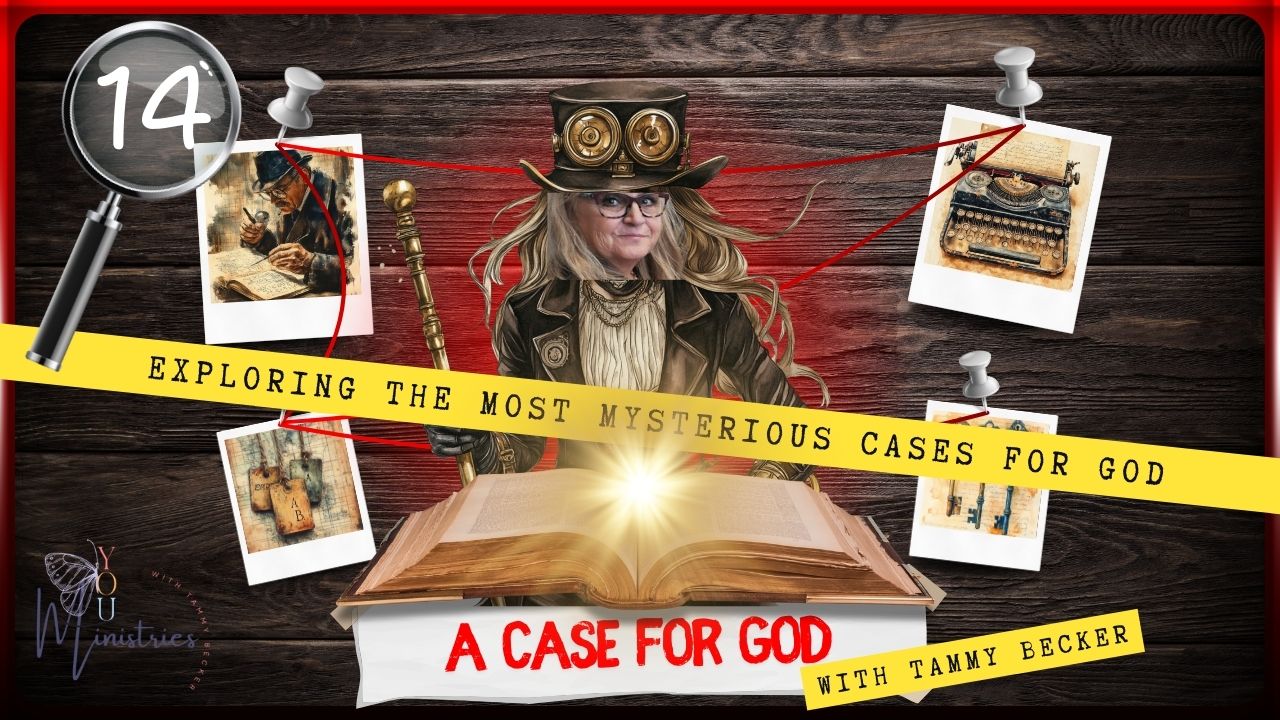
In 1925, a Tennessee teacher named John Scopes was tried under a state law restricting the teaching of human evolution in public schools. The case became a national conversation about education, religious conviction, and scientific ideas. In Episode 14 of A Case for God, Tammy, founder of You Ministries, revisits the Scopes Monkey Trial and asks how believers can pursue knowledge while remaining rooted in Scripture and in Christ.
Why the Scopes Monkey Trial Still Matters Today
The trial took place in Dayton, Tennessee, but the questions it raised still reach our classrooms, churches, and dinner tables. People sometimes assume that asking scientific questions requires giving up faith, or that faith forbids us to investigate the natural world. The Scopes case shows how quickly a debate over a specific law can become a contest over who gets to define truth.
Scopes was convicted of violating the Butler Act. Yet the verdict did not settle the larger questions of evolution, biblical interpretation, or how science should be taught. Clarence Darrow and William Jennings Bryan became symbols in a public dispute much larger than either man. Media accounts and later dramatizations also shaped the trial’s reputation. We can learn from its history without treating a courtroom contest as a final answer about God.
Scientific study can describe patterns and processes in creation. Scripture tells us whose world this is and calls us to wisdom, worship, and love. Sometimes particular scientific claims and biblical interpretations do come into tension; careful thinking is needed then. The faithful response is to examine the evidence and the text honestly, and to treat people who disagree with dignity.
Key Scriptures for This Investigation
The Bible invites us to study God’s works and to recognize the limits of pride. These four passages connect curiosity about the world to humility before the Creator and love toward our neighbors.
Psalm 111:2 (ESV)
“Great are the works of the Lord, studied by all who delight in them.”
Connection: Studying the world can be an expression of wonder. The psalm directs delight toward the Lord whose works we observe.
Proverbs 4:7 (ESV)
“The beginning of wisdom is this: Get wisdom, and whatever you get, get insight.”
Connection: Seeking understanding is worthwhile. Wisdom also asks how we use what we learn and how we weigh our conclusions.
1 Corinthians 8:1 (ESV)
“Knowledge puffs up, but love builds up.”
Connection: Paul warns that knowing something does not excuse contempt. In a difficult conversation, love should govern our words.
Colossians 1:16–17 (ESV)
“For by him all things were created, in heaven and on earth, visible and invisible”
Connection: Paul centers creation on Christ. Our study of the world takes place within the larger confession that all things belong to Him.
These verses do not supply a scientific model or resolve every disagreement about origins. They do give us a way to approach the discussion: ask honest questions, test our assumptions, and remember the One we worship and the people we are called to love.
Key Takeaways from the Investigation
- Bring curiosity to the study of creation and patience to the study of Scripture.
- Let love shape conversations about evidence and interpretation, especially when convictions differ.
- Hold your conclusions with humility and keep Christ at the center of your search for truth.
👉 Watch the Full YouTube Lesson👈
Want the complete biblical investigation? Tammy walks through the Scopes Monkey Trial, its historical setting, key Scriptures, the tension between science and faith, and practical ways to have thoughtful conversations that cannot all fit into this companion blog.
👉 Watch Episode 14 on YouTube Here👈
In This Episode, You’ll Discover
- 📖 How Scripture invites study of God’s works while pointing us toward wisdom.
- 🧠 What the 1925 Scopes trial actually concerned and why it drew national attention.
- 🔍 Why a legal verdict could not resolve every question about science and faith.
- 🙏 How to stay rooted in Christ while considering difficult questions.
- 💡 How humility and love can change a conversation with someone who sees things differently.
Join the Conversation
Have you ever felt that curiosity about science and faith pulled you in different directions? Share your thoughts in the comments on the YouTube lesson, and don’t forget to Like, Subscribe, and turn on notifications so you never miss another episode of A Case for God.
Want to Go Deeper?
If you love to create, create, create—the Faith Pod is for you!

Every week you’ll receive Bible journal pages, printable resources, in-depth lessons, devotionals, and special monthly bonuses designed to help you dig deeper into God’s Word while following along with each episode of A Case for God.
Conclusion and Weekly Reflection
The Scopes trial placed a teacher and a state law at the center of a dispute that became a symbol of science and religion in conflict. The courtroom could decide whether a law had been broken; it could not tell us everything about creation or God. Psalm 111 calls us to study His works, while Paul reminds us that knowledge must be guided by love and that creation belongs to Christ.
This week, take an honest inventory of how you react when a new discovery or a different interpretation unsettles you. Do you become defensive, dismissive, or curious enough to listen and return to Scripture? Bring the question to God, examine it carefully, and speak with kindness to the person asking it with you.
Remember: the Creator is not threatened by an honest question. God invites you to seek wisdom and to love others as you learn. You are His child, free to pursue truth with humility and trust.
Next Episode Preview
Join us next week as we examine the Double-Slit Experiment and explore a question that reaches beyond the laboratory: Can quantum physics provide insights into the existence of God?
GET THE FREE DEVOTIONALS:
Sign up now and get 52 weeks of Christian Devotionals for Entrepreneurs sent directly to your inbox.
Download a FREE digital Micro Bible Journaling Page
Share your design talents with the world.